 When a fire happens, your family only has a few minutes to dash out of your home and reach safely. A working smoke detector alerts you to the danger, giving you more time to escape.
To guarantee your family’s safety, you need to make sure your home is outfitted with the right number of smoke detectors in the right places.
Quick Takeaways
- At least one smoke detector should be inside each bedroom and outside of each sleeping area.
- If your home has multiple stories, a smoke detector should be placed on every story.
- Test your smoke detector each month to ensure that it works.
- To guarantee your family’s safety, you should replace your smoke detectors every 10 years.
How Many Smoke Detectors Are Required by Law?
Under the National Fire Protection Association (NFPA) and most building codes, homeowners are required to have a smoke detector inside of each bedroom and outside of each sleeping area. Additionally, smoke detectors are required on every floor of the home.
In general, Lakeland and the rest of Florida follow this policy. Many newer homes also have interconnected systems that can trigger if any other detector senses smoke.
The Minimum Number of Smoke Detectors Based on Your Home Size
No matter what home size you have, you are required to have smoke detectors in the following locations.
- Inside of each bedroom
- Outside of every sleeping area
- On each floor of your home
One-Story Homes
Based on the previous guidelines, a one-story home must have at least one smoke detector. In reality, it will most likely need multiple devices. Since the typical one-story home has two or three bedrooms, you’ll often see three to five smoke detectors. The actual number required will depend on the layout.
Two-Story Homes
Because there are two stories, there must be at least two smoke detectors. Depending on the number of bedrooms and the layout, two-story homes will often have around four to seven smoke detectors.
Homes With Basements or Attics
If a home has a basement or attic, you’ll need to add a minimum of one smoke detector per added layer. However, smoke detectors only need to be installed in finished spaces. If you have an unfinished crawlspace above your room, an added smoke detector isn’t necessary.
Where To Install Smoke Detectors in Your Home
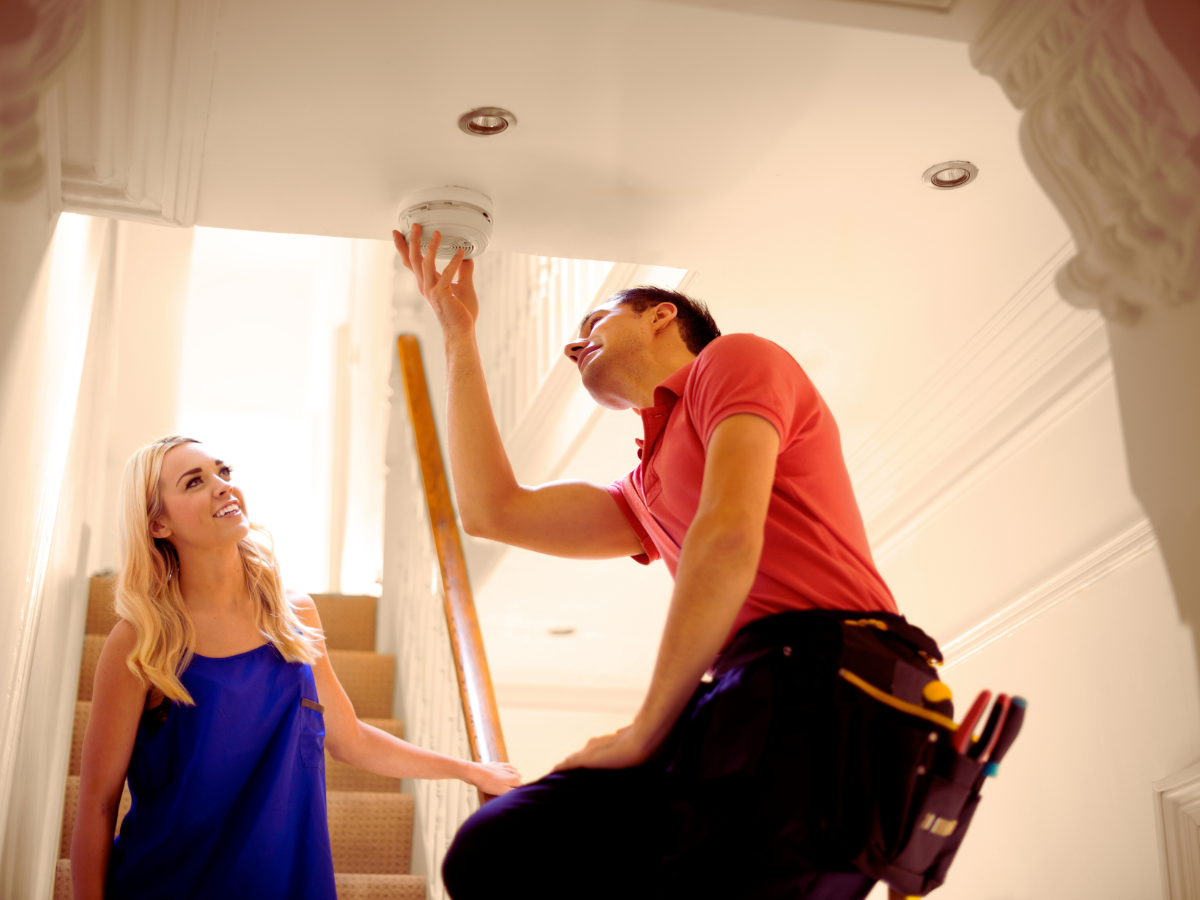 At a minimum, you should install smoke detectors in the following locations.
Inside of Every Bedroom
Smoke detectors need to be inside bedrooms to protect occupants.
Outside of Sleeping Areas and in the Hallways
As smoke spreads, you need to have smoke detectors throughout your home that are able to detect the smoke as it moves.
On Every Level of the Home
Each finished section of your home should have at least one smoke detector.
In Basements and Attics
Make sure to place a smoke detector at the attic’s entrance and at the bottom of your basement stairs.
Common Mistakes in Smoke Detector Placement
To protect your family, remember the following best practices.
- Don’t install smoke detectors too close to kitchens because smoke from cooking can cause false alarms.
- When in doubt, it’s always better to have too many detectors than too few.
- Place smoke detectors near or on the ceiling because smoke rises.
How Far Apart Should Smoke Detectors Be?
At the maximum, smoke detectors can be 30 feet apart. If you have a longer distance to cover, you should install more smoke detectors.
Types of Smoke Detectors To Consider
If you are installing new smoke detectors, you can choose from the following popular options.
- Photoelectric Smoke Detectors: These devices are exceptionally good at catching smoldering fires.
- Ionization Smoke Detectors: If you want to catch fast-moving flames, opt for ionization detectors.
- Smart Smoke Detectors: These units include mobile alerts and self-testing features.
- Dual-Sensor Alarms: A dual-sensor alarm combines the advantages of photoelectric and ionization sensors, so you get a superior level of protection.
Smoke Detector Maintenance and Replacement Schedule
For the best level of safety, test your smoke detectors at least once a month. Once per year, you should clean the smoke detector and replace the batteries. To ensure your safety, replace the unit every decade. If it starts to malfunction, it should be switched out earlier.
Additional Safety Tips
Dual-sensor, ionization, and photoelectric smoke detectors offer an added level of safety. Consider upgrading to ensure your family’s safety. If your home has gas lines or a garage, a carbon monoxide detector should also be installed.
In general, interconnected smoke detectors are the best option. When one detector goes off, it triggers every other detector in your home at the same time.
FAQs
To help you find the right smoke detector for your needs, consider the following frequently asked questions.
Is it a good idea to place smoke detectors in kitchens?
You generally don’t want to put a smoke detector in your kitchen because cooking can trigger false alarms. Instead, place a smoke detector at least 10 feet away.
Where should I place a smoke detector on my wall?
Because smoke rises, a smoke detector should be placed near the ceiling. This allows it to detect potential fires much earlier.
How often do I need to replace my smoke detector?
Smoke detectors should be replaced at least once every 10 years. If it stops working properly, you should replace it earlier. Additionally, the batteries should be replaced yearly.
Protect Your Home With a Proper Smoke Detector Installation
 If you need a smoke detector installation, we can help. Our experienced electricians can recommend the best placement options and review the latest smoke detectors available.
Don’t put up with any malarkey! Give Lakeland’s Mister Sparky, America’s on-time electrician a call today to schedule a free evaluation!