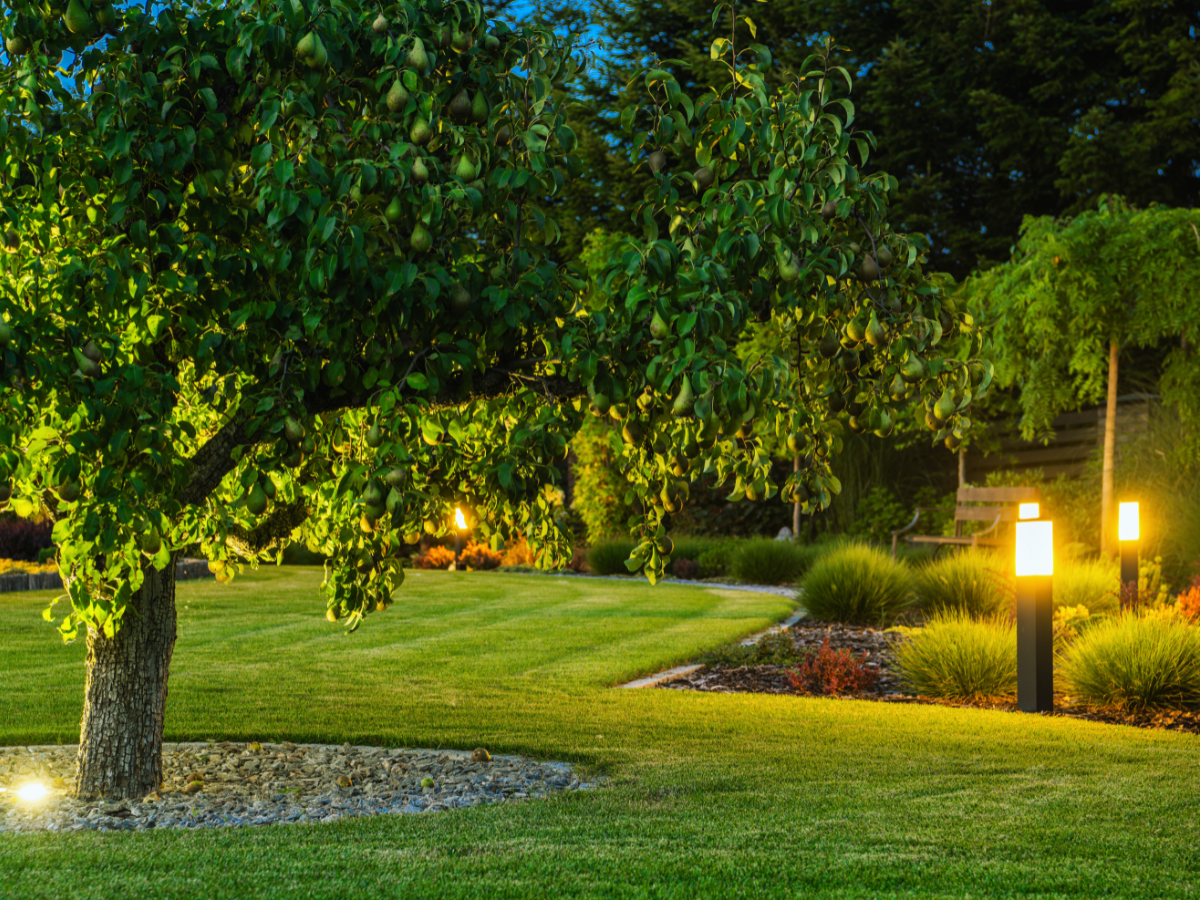
 Outdoor lighting improves safety and adds curb appeal to any home. In Florida, however, outdoor lighting has to survive challenges like humidity, storms, bright sunshine, and even bugs.
Let’s look at how you can improve your Lakeland, FL, home’s outdoor lighting design.
Quick Takeaways
- Outdoor lights in Florida have to survive heat, humidity, storms, and corrosion.
- Low-voltage LED systems with the right weather rating offer the best durability and energy savings.
- Lighting placement changes a house’s whole look, especially when highlighting pathways, patios, trees, and architectural features. Each requires a specific approach.
- Smart timers and photocells make managing the region’s variable daylight easier.
- To reduce installation risks and improve durability, hire a professional electrician to do the work.
Understanding Florida’s Outdoor Lighting Challenges
Florida has a combination of challenges that aren’t present in any other state. Your outdoor lighting design must account for these concerns.
Heat and Humidity Damage Cheaper Fixtures
The coastal air, especially with Florida’s notoriously high humidity, isn’t friendly to low-cost lighting systems. Salty and moist air encourages corrosion, leading to system degradation and failure. The heat and sunlight also degrade many types of plastics.
Even an inland region like Lakeland has issues. When shopping for outdoor lighting components, look for an IP65+ sealing rating or higher. The six and five represent two different values. The 6 is the highest rating for holding out dust, and systems rated 5 or higher can hold out heavy water streams from any direction.
Heavy Rain and Storm Exposure
IP65 lighting setups are especially important for dealing with storms, including hurricanes. Sealed fixtures are essential for any outdoor lighting system. Likewise, it is prudent to have proper whole-house surge protection to reduce the odds that damage to your outdoor lights might cause bigger electrical issues.
Step 1 — Determine Your Outdoor Lighting Goals
A purpose-driven design makes a huge difference. Setting specific goals allows you to pick the right lighting equipment.
Safety and Security Lighting
Many homeowners focus on safety and security for good reasons. Outdoor lights ensure that you can see to walk between your garage and your house. Likewise, security lights can turn on to discourage would-be intruders and wayward animals. Automation is now common for these systems, and professionally installing them ensures they’ll do their job when needed most.
Curb Appeal and Accent Lighting
Uplighting trees, walls, and screened lanais adds a high level of curb appeal to a house. Accent lighting allows you to show off the architectural points of interest across your home at night.
Outdoor Living and Entertainment Areas
Hot summer afternoons in Florida mean that many homeowners prefer to enjoy their outdoor areas later in the day or at night. If you’re looking to entertain guests, the right lighting sets the mood for parties, dinners, cookouts, and holidays.
Step 2 — Choosing Fixture Types for Florida Homes
The reliability of outdoor lights comes down to choosing the right fixture types.
You should strongly consider quality, function, and durability when choosing:
- Path lights with low profiles work best. Space them apart 6-10 feet and use bulbs that produce 100-200 lumens.
- Floodlights with a beam of 90-120° are best for covering driveways, patios, and other high-risk areas.
- Spotlights with a beam of 15-45° are ideal for highlighting trees, columns, and other details.
- Wash wall lights softly illuminate facades, minimizing harsh shadows while highlighting textures.
- Step and deck lights with low profiles help you identify tripping hazards.
- Post and bollard lights mark boundaries and light pathways. These lights typically stand 24-42″ tall.
- Pool and water-safe lights must be UL-listed with ratings for wet locations or submersion. Uses them near pools, fountains, and other water features.
LEDs vs. Halogens in Florida
Halogen lights are popular in these roles throughout much of the country, but we tend to recommend LED lights. LED systems last 5-10 years, compared to 8-12 months for halogens.
LEDs produce less heat, which is a big win if lights are going to be close to people. Likewise, LED lights use 25-30% less energy.
Step 3 — Select the Best Materials for Florida’s Climate
Quality materials are critical for outdoor lights. Stainless steel needs to be marine-grade. Brass is a good choice, and adds a patina that’s both protective and appealing.
If you use copper, shop for high-end coastal-grade options. If you elect to use aluminum fixtures, only buy powder-coated ones.
All housings need to be UV-resistant, and this goes double for anything plastic or composite. UV rays hammer these materials, leading to warping, cracking, and fading.
Step 4 — Plan the Placement for Maximum Impact
 Pathway and Walkway Lighting
Spread, spacing, and glare reduction are the keys. The goal of proper spacing is to avoid dark spots while reducing glare.
Tree and Landscape Uplighting
The right beam angles provide a sense of layering that shows off trees, bushes, and other large plants. Well lights shoot up toward plants for a dramatic effect. Tree-mounted moon lights give a more natural nighttime look.
Home Exterior and Architectural Accent Lighting
Show off your home’s exterior with the right lighting. Highlight features like columns, gables, textures, and shadows.
Pool and Patio Lighting
Lighting makes a pool space safe and attractive. Be sure to use UL-listed lights for any submersible fixtures.
Step 5 — Upgrade With Smart Controls for Florida Living
Photocells
Photocells automatically adjust lighting to varying daylight conditions. They provide better year-round consistency, ensuring lights come on when the sun goes away.
Timers and Home Automation
Automatically turning the lights on at a specific time is great, especially for homeowners who are away at work all day. They also tend to save you money.
Motion Sensors and Energy Efficiency
For less-used lights, motion sensing can reduce the time lights are on. This saves money, and it also adds security by surprising intruders or animals that move nearby.
Safety and Code Requirements for Outdoor Lighting
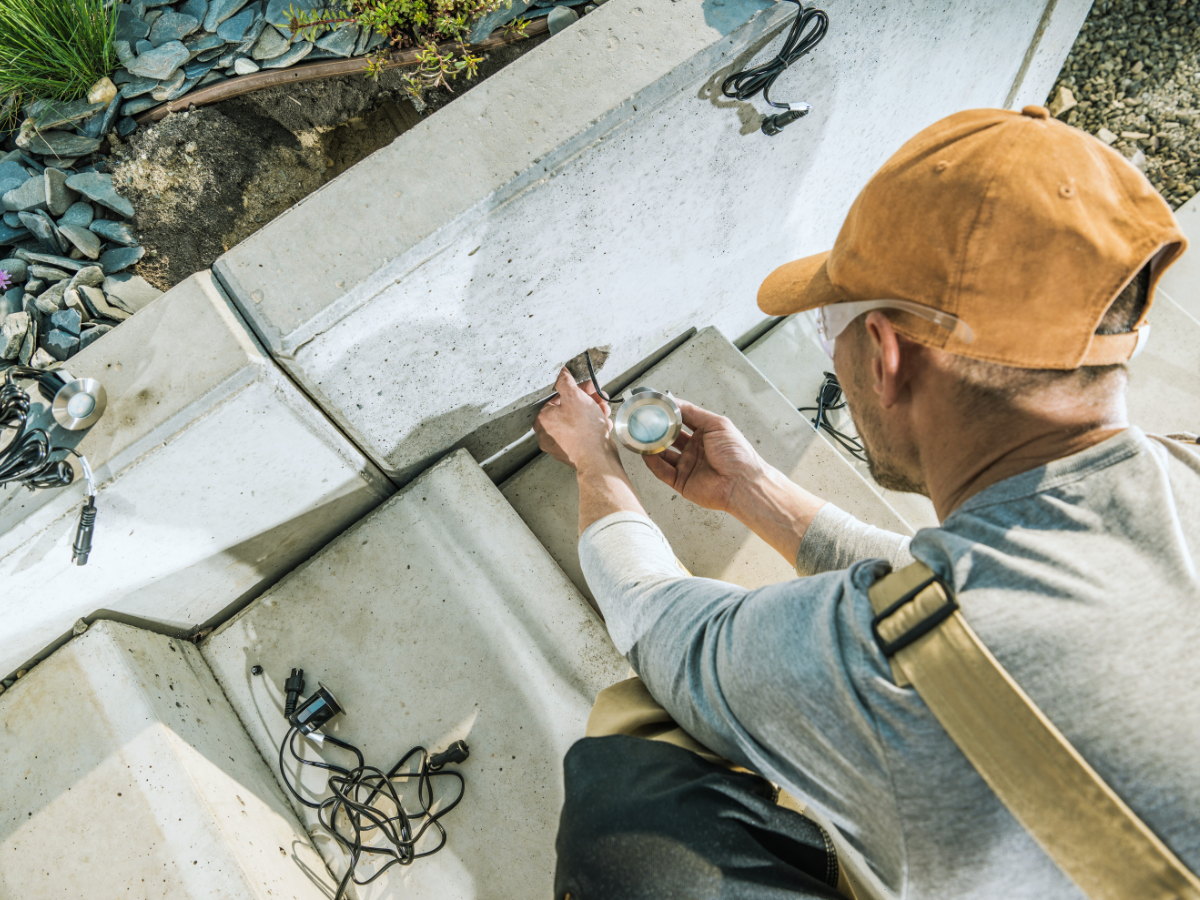
Outdoor electrical work is flat-out a professional project. The wiring needs to be weather-rated with GFCI protection. Likewise, burying underground lines for lights requires equipment and experience. Our electricians know the UL- and ETL-listed fixtures in and out, so they can pick the right solutions.
Step 7 — Maintenance Tips to Keep Florida Outdoor Lighting Performing
Preventing corrosion, dimming, and water intrusion is especially important in Florida.
For proper maintenance, you need to:
- Clean lenses
- Tighten connections
- Annually inspect seals and gaskets
- Clear mulch from fixtures
- Check for insect intrusion
- Identify and replace failing transformers early
When to Call a Professional Electrician in Lakeland, FL
 Mister Sparky handles system design for a variety of outdoor lighting configurations.
Homeowners should talk to us if they’re dealing with:
- High-voltage or complex wiring
- Smart system integration
- Troubleshooting recurring problems
- Storm-related electrical issues
- Lighting-related electrical damage
FAQs About Outdoor Lighting in Florida
What is the best type of outdoor lighting for Florida homes?
The best setup uses LED lights in fixtures with an IP65+ rating. This prevents moisture and corrosion from damaging lights.
Does humidity and heat affect outdoor light fixtures?
Yes, heat and humidity lead to material fatigue. From warped plastic to corroded metals, Florida homeowners see it all when it comes to outdoor lights.
How long should outdoor lighting last in Florida’s climate?
Modern LED lights for outdoor use typically last 5-10 years, as long as they’re in high-quality IP65+ fixtures.
What brightness (lumens) do I need for pathways, patios, and landscapes?
For pathways, target 100-200 lumens. Patios lighting should be 300-600 lumens. Accent and landscape lights look best at 50-300 lumens. Proper spacing leads to better-looking results than more illumination.
Should I choose low-voltage or line-voltage for outdoor lighting?
Low-voltage lighting, meaning 12- or 24 volts, is best for Florida’s wet environment. We only recommend line-voltage lighting (120 volts) for high-output systems that light large areas.
Do photocells and timers work well in Florida?
Yes, photocells are optimal for Florida’s constantly changing light conditions.
How do I prevent bugs from gathering around outdoor lights?
Warm-colored LED lights with yellow and amber tones and downward-facing fixtures discourage bugs.
Ready for Reliable Outdoor Lighting? Call Mister Sparky of Lakeland, FL
 Mister Spark is Lakeland’s on-time electrician. If you want to maximize safety, durability, and home beauty with outdoor lighting in Lakeland, FL, we can help.
Don’t put up with any malarky, call Mister Sparky today to discuss your outdoor lighting needs.