If your light switch sparks when you flip it on, it could be a sign of trouble. Sparking can be normal, but it can also indicate a serious problem with your circuitry.
Below, we’ll discuss when you should be concerned about a sparking light switch and cover five common causes of this issue.
Quick Takeaways
- While a tiny spark inside a light switch can be normal, visible sparks usually signal trouble.
- Switches that smell burnt, feel warm, or make popping sounds require immediate attention.
- Loose wiring and excess wear can cause switches to spark.
- A licensed electrician can safely diagnose and repair a sparking light switch.
Why Is My Light Switch Sparking?
If your light switch is sparking, it’s usually due to electrical arcing between its contacts. When current jumps across a gap between two conductive surfaces, it ionizes the air and transforms it into a superheated plasma spark that closes the gap and completes the circuit. This “load arc” usually resembles a tiny lightning bolt.
When you flip a light switch, it’s normal to see a split-second spark as the state of the circuit changes. This momentary blue flash is usually hidden behind the switch’s faceplate. However, seeing a large spark, or seeing sparks whenever you flip a switch, is a sign of trouble.
If you hear a crackling or popping sound or notice yellow, orange, or white sparks coming out of your switch’s faceplate, your switch may have worn-out contacts, loose wiring, or a circuit overload, which can all be dangerous. If your switch is hot and you notice a burning odor, an electrical fire could be imminent.
When Is a Sparking Light Switch Normal?
When a light switch’s contacts separate while current is flowing, the air in the gap can get hot and create a tiny blue spark. Electrical contacts sometimes arc when the switch flips on or off or when dust, corrosion, or worn surfaces create tiny gaps between them.
Seeing an occasional small spark or flash through a light switch’s faceplate is usually nothing to worry about. As long as the switch works normally without feeling hot to the touch, making noise, or smelling strange, a spark can be harmless.
When Is a Sparking Light Switch Dangerous?
On the other hand, in many cases, a sparking light switch can be hazardous. Persistent sparks can easily start fires and cause shock injuries. Signs of danger include:
- Large visible sparks: Noticeable sparks near a light switch can create intense heat that can degrade and melt wire insulation and ignite flammable materials in your walls.
- Burning odors: Burning smells indicate that materials around the switch are hot and starting to melt or smolder.
- Crackling, buzzing, or popping sounds: Odd noises can signal you have a faulty wire or connection inside the light switch, creating a fire and shock hazard.
- Warm switch plates: If your light switch is hot when on or warm after being off, sparks may be the cause.
- Flickering lights: A switch that prevents current from flowing smoothly to your lights can cause them to dim and brighten inconsistently.
- Smoke, melting, or discoloration: If the switch’s faceplate is smoking, melted, or has brown or black marks, it could be a sign of an electrical fire.
Common Causes of a Sparking Light Switch
While all sparking light switches experience electrical arcing, this phenomenon can have many causes, including:
1. Loose Wire Connections
When connectors like backstab connectors or terminal screws come loose, resistence can build in the circuit and generate excessive heat. If the voltage in the circuit is high enough, the loose connection will spark.
2. Worn-Out Switch Contacts
Light switch contacts can wear out over time after repeated use. After thousands of flips, electrical arcing, mechanical friction, and oxidation can degrade the metal surfaces of the contacts and eventually cause sparks.
3. Faulty or Damaged Wiring
Corroded wiring, broken wiring, and loose connections can all increase resistance in a circuit. This makes it easier for heat to build up and sparks to form as current moves through.
4. Overloaded Circuits
An overloaded circuit can cause sparking if excess current runs through the switch. If you flip the switch on or off, the additional load can strain it and cause it to spark.
5. Aging Electrical Components
As a switch’s electrical components age, they can degrade. The metal contacts inside a switch can become misaligned, heat up, and spark. Conductive carbon deposits and worn-out toggle springs can also encourage arcing.
What Should You Do If Your Light Switch Sparks?
If your light switch is sparking, you need to treat the situation seriously. Here’s what to do:
 Stop using the switch: Turning the switch off will stop current from flowing through it, although its connecting wires may still be energized.
- Watch for warning signs: Be on the lookout for additional sparks or signs of fire. If you notice a melted or scorched faceplate, burning odors, or strange noises, call an electrician immediately.
- Turn off power if necessary: Cutting the supply of power to the light switch is the best way to prevent a fire. To deenergize the circuit, go to your electrical panel and flip off the breaker that connects to the switch.
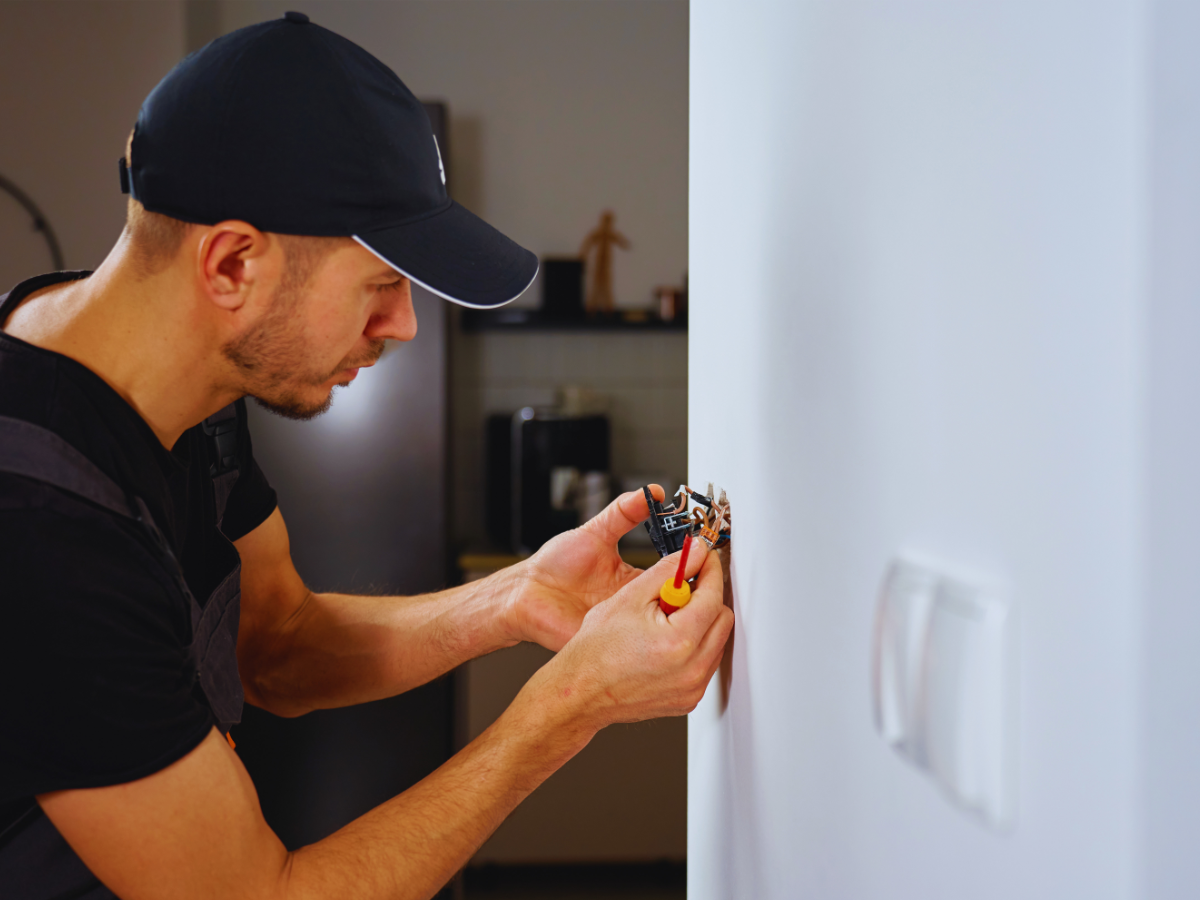
- Avoid DIY electrical repairs: When you’re dealing with a sparking light switch, DIY fixes can fail or cause bigger problems. A licensed electrician is trained to precisely diagnose the issue and fix it safely.
- Schedule professional troubleshooting: When a professional inspects your light switch and circuitry, they’ll be able to identify and resolve issues before they escalate.
Can a Sparking Light Switch Cause a Fire?
Electrical arcing can create extreme 10,000°F temperatures as current passes through the small, high-resistance gap between the contacts of a light switch. Sparks and intense heat can easily ignite dust, wires, and wood framing in the walls and damage the switch further. They can also melt plastic wire jackets, causing them to shrink and expose the bare conductor.
If the insulation burns, it can create conductive carbonized tracks that can make arcing and heat generation worse. The arcing can also oxidize copper and aluminum wires, which can increase resistance along the circuit.
If your light switch is sparking, you’ll want to repair it right away. Neglecting this issue can cause damage to spread through your electrical system and put your household at risk of fire or shock. Taking quick action helps you stay safe, avoid property damage, and keep repair costs low.
How Electricians Diagnose a Sparking Light Switch
When electricians are looking for the root cause of a sparking light switch, they go through a multi-step process to identify the issue, which involves:
- Inspecting switch connections: Your electrician will make sure all wires are intact and securely tightened down. They will also look for corrosion, wear, and other damage to the circuitry.
- Testing circuits: After their visual inspection, your electricians will use a digital multimeter to check the circuit’s voltage and verify that current flows through it properly.
- Identifying hidden wiring issues: To ensure safety, your electrician may use a thermal imaging camera to detect hot spots in your circuitry that are obscured from view. They will also assess your wiring’s type, look for fraying, corrosion, and age-related damage, and ensure your switch is grounded.
- Replacing damaged components: If your electrician determines that your light switch is worn out or otherwise unusable, they will replace it with a new one. They may also install new wiring, connectors, and terminal screws as needed.
FAQ
Why does my light switch spark when I turn it on?
If your light switch sparks when you turn it on, electrical arcing is to blame. Sparks can form when electrical current jumps through the air between the switch’s metal contacts, creating a small stream of glowing superheated plasma.
Is it normal for a light switch to spark once?
It’s normal to see a small, singular blue spark inside a light switch when you turn it on. This “load arc” forms when current jumps between the switch’s metal contacts as it flips. A large white, yellow, or orange spark that is visible outside the cover or reoccurs is a sign of a problem.
Can a bad light switch cause a fire?
A faulty light switch can cause a serious electrical fire when a loose connection creates sparks and extreme heat. Under these circumstances, wire insulation can melt and materials in your walls can ignite.
Should I replace a sparking light switch immediately?
If you see visible orange, white, or yellow sparks escaping the switch’s faceplate, you need to replace your light switch right away. Crackling, buzzing, or popping sounds; signs of scorching, and unexplained heat near the switch are also signs you need to take immediate action.
Why does my light switch make a popping sound?
Popping and/or crackling sounds are signs of arcing inside your light switch. As sparks form, intense heat causes the air to make these distinctive noises as it expands.
Can loose wiring cause a light switch to spark?
Loose wiring can easily cause a light switch to spark. When wires become disconnected from the switch’s terminals, they create the opportunity for arcing, which occurs when electricity jumps across the gaps.
Get Professional Electrical Troubleshooting in Lakeland, FL
 If your light switch is sparking, arcing, or overheating, you need to take action immediately. Ignoring the issue can lead to expensive electrical system damage, injuries, and fire. The professional electricians at Lakeland Mister Sparky can provide electrical troubleshooting services that will reveal problems in your system and put you on the path to a fix.
Our capable team serves homeowners in Lakeland, FL, and its surrounding areas. If you suspect trouble within your circuitry, don’t hesitate to schedule an inspection with Lakeland’s on-time electrician. Remember, when it comes to maintaining your home’s electrical system, safety is paramount. Don’t put up with any malarky; call Mister Sparky today!