 Florida homeowners have two options when lighting their properties: low-voltage or line-voltage systems. But it isn’t a simple choice, especially with Florida’s humid, wet climate.
Choosing the right voltage has an impact on safety, brightness, long-term costs, and even outdoor lighting performance. The article breaks down what each lighting system offers, their benefits, and when they’re ideal.
Quick Takeaways
- Low voltage (12–24V) systems: Safer, more energy-efficient, easier to install, and ideal for most residential landscape lighting.
- Line voltage (120V) systems: Provide more power and brighter output but require professional installation and higher safety precautions.
- Low voltage: Best for pathways, gardens, patios, accent lighting, and trees.
- Line voltage: Best for large properties, tall structures, and high-intensity security lighting.
- Line voltage: GFCI protection and sealed fixtures are essential due to Florida’s humidity and storms.
What Is Low Voltage Landscape Lighting?
Low-voltage landscaping lighting uses a transformer to step down or transform the standard household electricity of 120V to 12 or 24V.
Safety Benefits
Thanks to their low voltage, low-voltage lighting systems reduce the risks of electrical shocks and are less likely to be fire hazards.
Applications
Low-voltage lighting can be a great way to light pathways and driveways. They can also be used for decks, patios, pools, garden sculptures, and garden beds as they create a soft, welcoming ambiance.
Key Benefits of Low Voltage Lighting
Low-voltage lighting offers a number of benefits, such as:
- Minimal risk of getting an electrical shock, making it safe for kids, pets, and wet areas.
- 12 or 24V uses significantly less energy than the standard 120V.
- These systems use less power, which translates to lower energy bills.
- The low voltage allows homeowners to be more creative with placement.
- Their low voltage means they need fewer upgrades. And their simple setup requires less maintenance.
Best Uses for Low Voltage Systems
If you’re considering low-voltage systems, here are the best uses for them.
- Pathways
- Accent lighting
- Garden beds
- Landscape features
- Non-submersible pool surroundings
- Architectural accents
What Is Line Voltage Landscape Lighting?
Line-voltage systems use the standard electrical current (120V) and wiring in homes, allowing you to connect your light fixtures directly to your outlet. Because they operate at a higher voltage, line-voltage systems need professional electricians to install them, and they must comply with local and national codes.
Key Benefits of Line Voltage Lighting
If you need brighter lights on your property, you should consider line-voltage lighting.
Here are the benefits:
- These systems provide powerful, bright lights, making them ideal for security lighting.
- The higher voltage reduces voltage drops, ensuring your property always maintains the same light intensity.
- Line-voltage systems can effectively illuminate large outdoor areas.
Best Uses for Line Voltage Systems
If you’re considering line-voltage systems, here are the best uses for them.
- Security lighting
- Commercial spaces
- Tall architectural features
- Wide open yards
Low Voltage vs Line Voltage: Side-by-Side Comparison
Which System Is Better for Florida Homes?
Low-voltage systems are usually better for Florida homes, with about 90% of Florida landscapes opting for these systems. However, you may need a line-voltage system if you need a higher output or you need to light a large outdoor area.
Florida Climate Factors to Consider
Florida’s high humidity, sudden storms during the summer, and salty air (even inland) can affect the type of material you use for both lighting systems. For instance, the state’s high humidity can quickly corrode metals. To prevent this, electricians often use anodized or powder-coated finishes.
To prevent damage from sudden storms, electricians use sealed fixtures with IP66 or higher. And to prevent shocks in wet, outdoor environments, a licensed team will ensure that all outdoor outlets are on GFCI circuits.
When Low Voltage Is the Smart Choice
Low-voltage systems are the smart choice for the following scenarios:
- Pathways
- Gardens
- Accent lighting
- Small to medium yards
- Pool decks
- Patios
- HOA neighborhoods
When Line Voltage Is the Better Choice
Line-voltage systems are the better choice for the following scenarios:
- Wide, outdoor areas
- Large estates
- Tall trees
- Façade lighting
- Security floodlights
- Commercial properties
Can You Mix Low Voltage and Line Voltage in the Same Landscape Design?
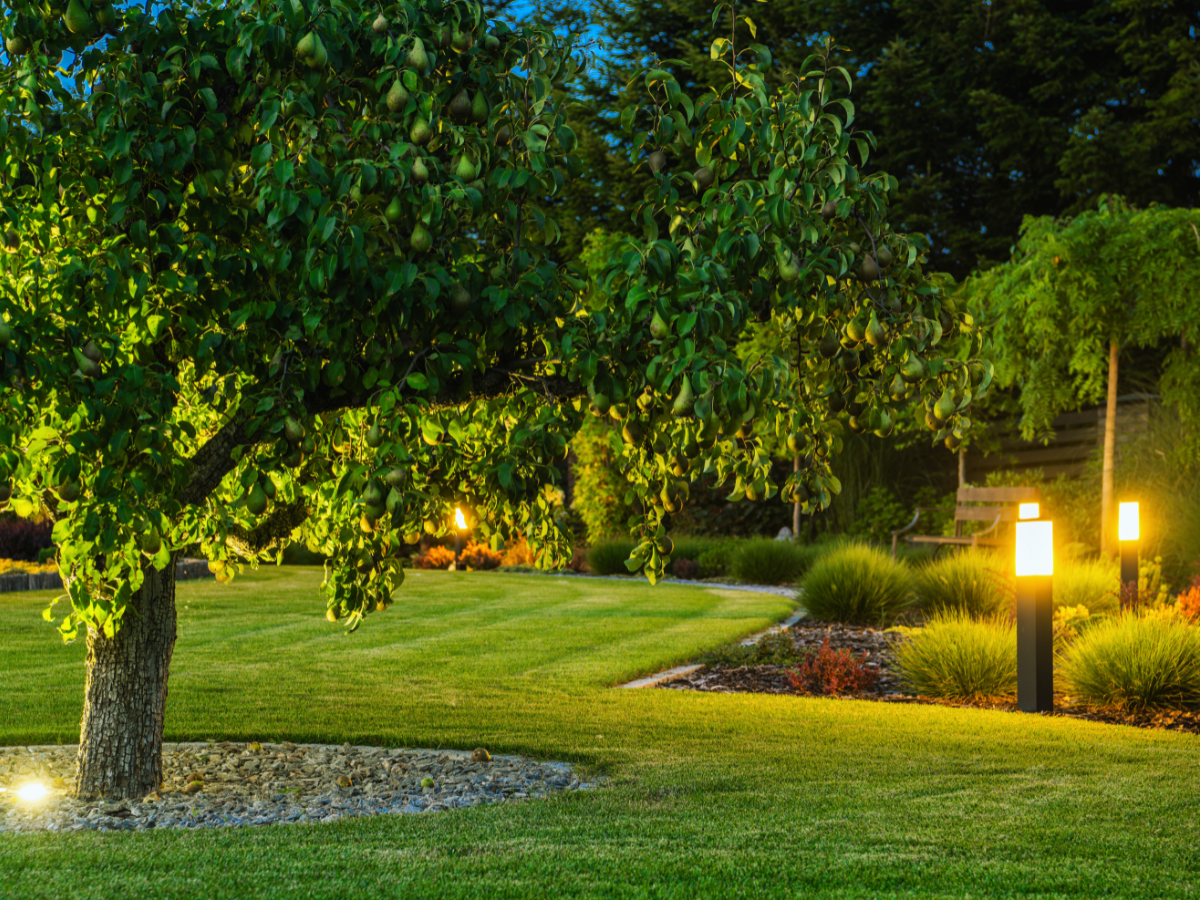 A hybrid system combines low-voltage and line-voltage systems. However, each system must be separate, running on its own circuit.
The approach is beneficial when you’d like to combine effects: lighting up a large tree and using accent lights for your pathway, for instance.
To ensure safety, licensed electricians must check that the hybrid system complies with national and local codes. In addition, all outlets must be (GFCI) protected.
Safety and Code Requirements Florida Homeowners Should Know
If you’re leaning towards line-voltage landscape lighting or even a hybrid system, here’s what you should know:
- Burial depth for wiring: 120V underground feeder cables need 12 inches of cover, while conduits need 18-24 inches.
- Proper conduit: Conduits must be rated for wet locations.
- Weather-rated junction boxes: All junction boxes must be able to keep moisture out.
- GFCI protection for all outdoor circuits: All outdoor circuits must have Ground Fault Circuit Interrupter (GFCI) protection.
- Professional installation: Unlicensed installation is dangerous, especially for line-voltage systems. Contact our Lakeland Mister Sparky electricians for a proper installation.
Maintenance Tips for Long-Lasting Outdoor Lighting in Florida
Installing outdoor lighting on your Florida property? Here are some maintenance tips that can extend your lighting system’s lifespan.
- Bulb checks: Replace any flickering or burnt-out bulbs. If possible, use LED bulbs.
- Fixture cleaning: Turn off the power and wipe down the fixtures with a damp cloth.
- Corrosion prevention: Choose fixtures that can resist Florida’s salt air and humidity.
- Transformer inspection: Inspect your transformer frequently for humming or overheating.
- Storm-prep recommendations: Turn off the outdoor power, bring light fixtures indoors, and move your transformer to a dry, elevated area.
FAQ: Low Voltage vs Line Voltage Landscape Lighting
Is low-voltage landscape lighting safer than line voltage?
Yes, it’s safer simply because it uses a lot less energy, minimizing electrical shocks.
Does line voltage provide brighter outdoor lighting?
Yes, since line-voltage systems use 120V, their lights are brighter, more powerful, and more intense.
Do I need a transformer for low-voltage lighting?
Yes, transformers step down or transform the standard 120V in a home’s electrical circuit to 12 or 24V.
Can I install line voltage landscape lighting myself?
No, a DIY installation can be dangerous. Contact our Lakeland’s on-time electrician to perform the installation for you.
Which option lasts longer in Florida’s climate?
Low-voltage landscape lighting systems tend to last longer in Florida’s climate since they use less heat, are more durable, and can resist corrosion better.
Does low-voltage lighting cost less to run?
Yes! Because low-voltage lighting systems use a lot less power, they are more cost-effective in the long-term.
What’s better for pathway lighting: low or line voltage?
If you’re looking to accent your path with small lights, you’re better off installing a low-voltage lighting system.
Can low-voltage lighting be used for security lights?
No, security lights need a bright, intense light. A line-voltage lighting system is the best option in this case.
Need Professional Outdoor Lighting in Lakeland, FL? Call Mister Sparky
 When you need professional outdoor lighting in your Lakeland home, call Lakeland’s on-time electrician at Mister Sparky. You’ll get safety, code compliance, and long-term reliability. Plus, whatever you need, we can deliver.
We can install a low-voltage system, a line-voltage system, or a hybrid lighting system in your home. We also have years of experience dealing with Florida-specific issues, like high humidity, sudden downpours, and the salty air that causes corrosion.
Contact our Lakeland Mister Sparky team to schedule a design, installation, or troubleshooting consultation today!